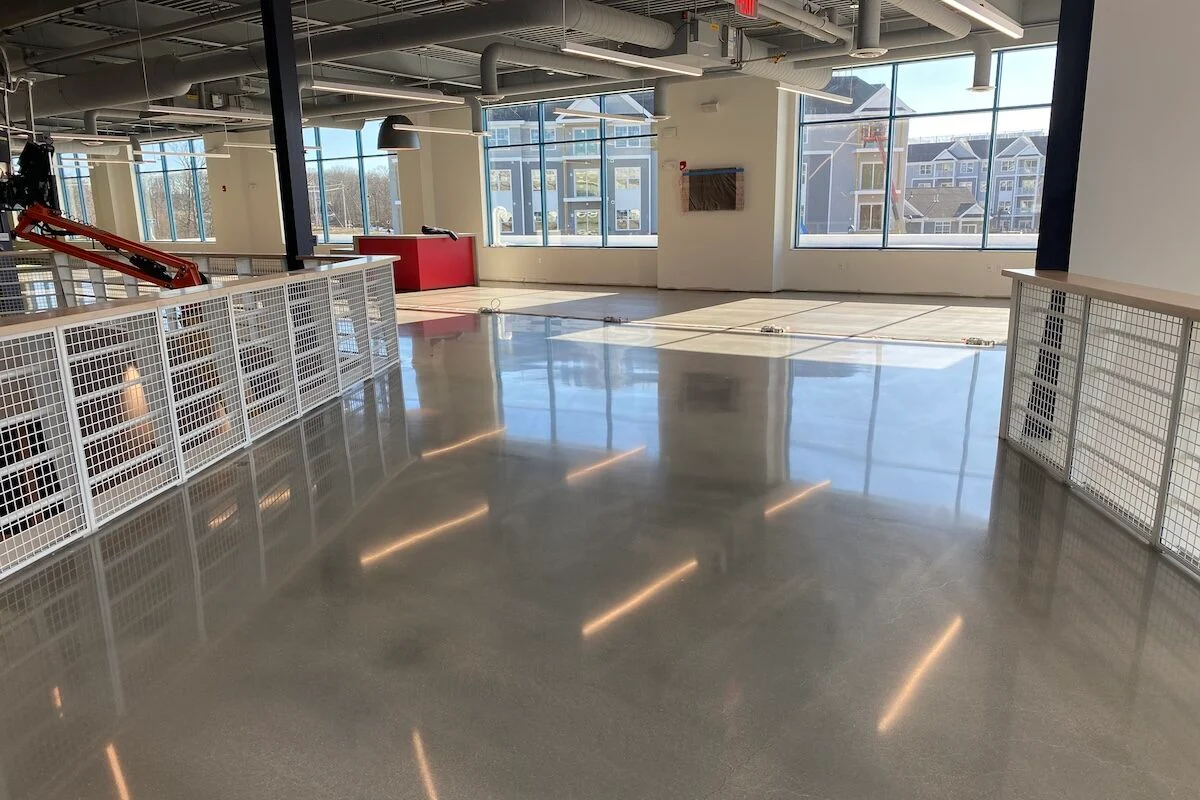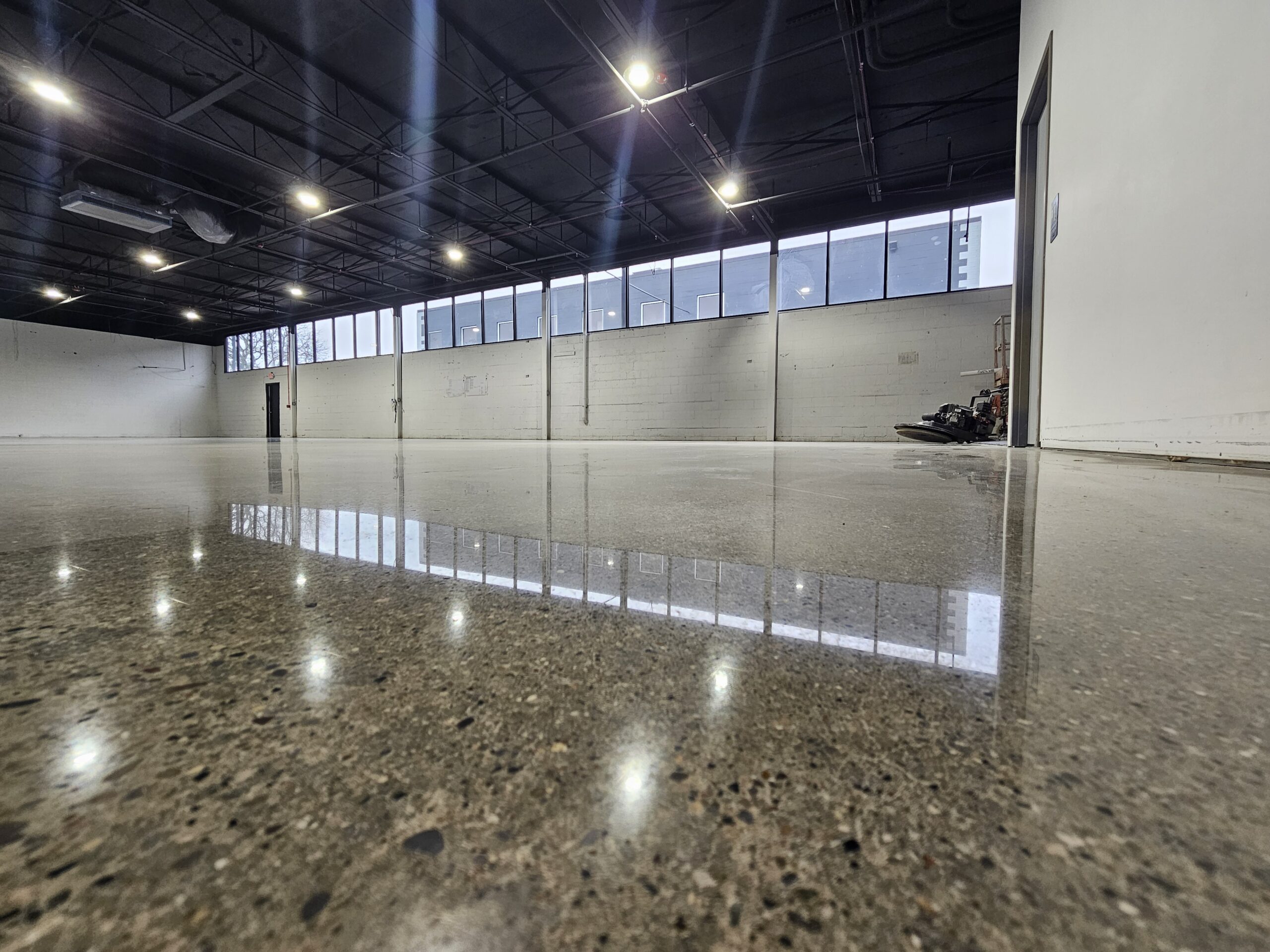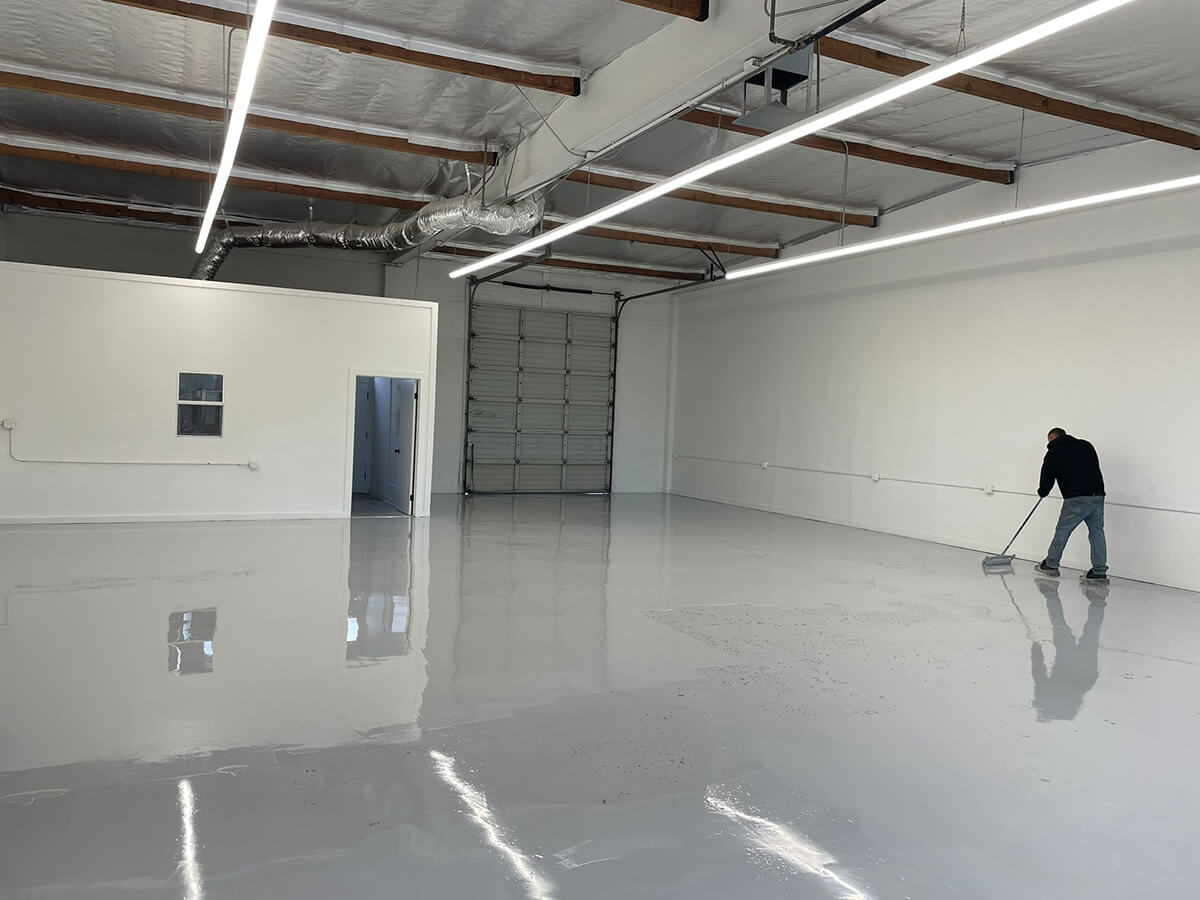
Ground and hardened from your existing slab. No coating to chip or peel — just a durable, low-maintenance finish that lasts the life of the building.
Polishing works into the concrete itself, not on top of it. We use diamond tooling in progressively finer grits combined with a lithium silicate densifier that chemically hardens the slab from the inside. The surface becomes denser, harder, and more reflective with every pass — and there's nothing to delaminate or replace down the road.
No recoating cycles, no stripping, no wax. Just a floor that holds up.
Because the finish is ground into the slab, there's no coating layer that can delaminate under heavy traffic, hot tires, or dropped equipment.
The densification process closes the pores of the slab completely. Bare concrete dusts constantly — polished concrete doesn't, protecting inventory and machinery alike.
No recoating every few years, no strippers, no floor wax. A dust mop or auto-scrubber is all the maintenance it needs, year after year.
Eight passes. Four tool changes. One floor that will outlast the building's next renovation.
We walk the entire floor, check for existing sealers or coatings, test concrete hardness, and map any cracks, soft spots, or high points that need attention before grinding starts.
Cracks get filled with semi-rigid epoxy. Control joints are cleaned and re-filled flush. Skipping this step shows in the finished floor — we don't skip it.
The most aggressive pass. Metal-bond diamond segments cut through any old sealer, flatten the slab, and open up the concrete surface so the densifier can penetrate later.
Refines the scratch pattern from the coarse cut and continues opening the pores. The floor starts to look cleaner and more uniform at this stage.
We apply lithium silicate densifier and work it across the wet surface. It reacts with free lime in the concrete to form calcium silicate hydrate — filling the pores and hardening the slab from the inside out.
We switch from metal-bond to resin-bond diamonds here. These finer pads refine the surface and start developing the first hints of sheen. Matte finish jobs stop around this range.
Each successive grit removes the scratches left by the previous one. We run as many passes as your chosen finish requires — stopping at 800 for satin, continuing to 1500 or 3000 for semi-gloss and high-gloss.
A penetrating guard is applied and burnished in. It sits below the surface, repelling oil and water without changing the look or feel of the polished finish.